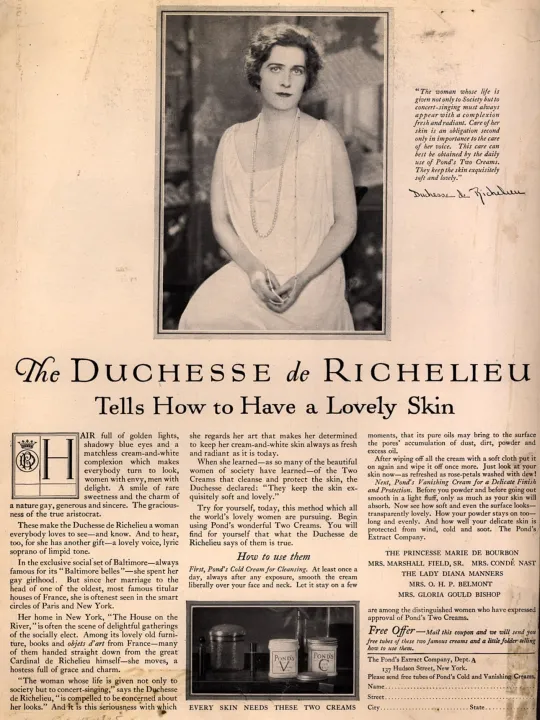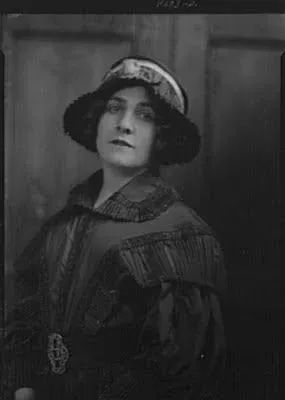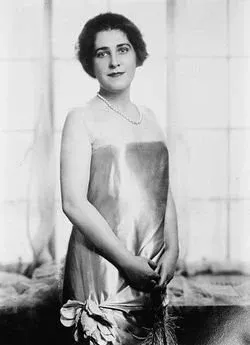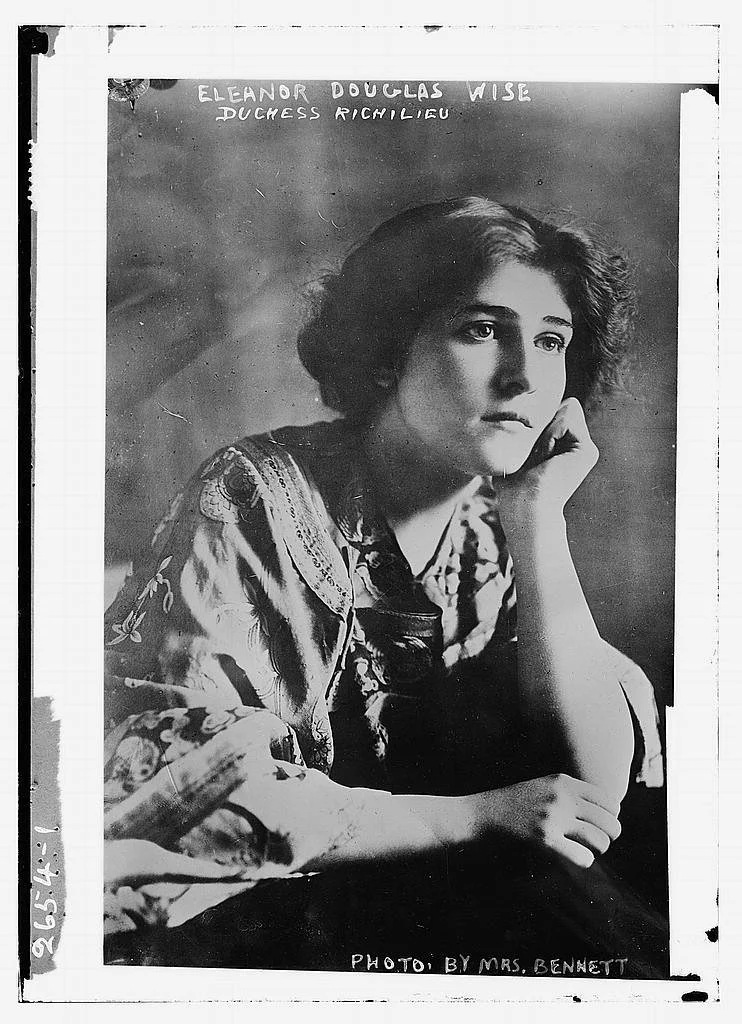
1890 – 1972 aka Duchess Richelieu
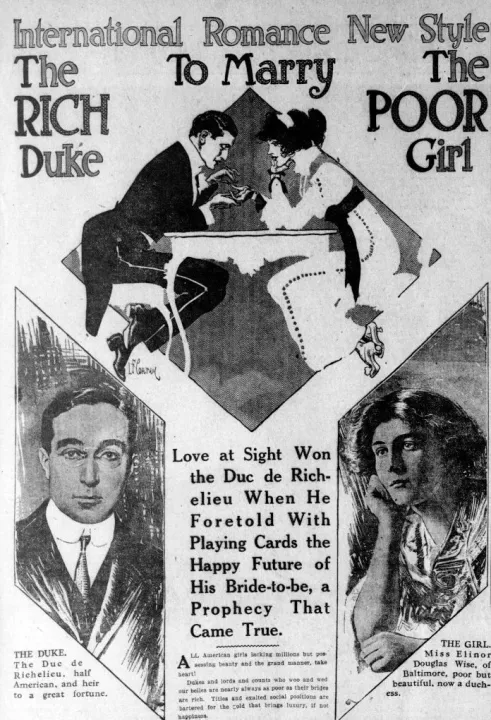
In the early 1900s, France’s Duc de Richelieu was well past marrying age and this did not go unnoticed. The Duke was known for his charm, wide travels, expert knowledge of English literature, brilliant conversations and, of course, fabulous wealth. He was a descendent of France’s oldest noble family, the great, great grandnephew of Cardinal Richelieu.
“Many a gold-baited trap was set for Duc de Richelieu by socially ambitious mothers,” recalled a reporter for the San Francisco Call who later looked back on his life story.
The Meeting
However, Duc de Richelieu instinctively knew that his bachelor days were over at a dinner party when he set eyes on Baltimore-born Elinor Douglas Wise as she performed Jewel Song, an aria from Charles Gounod’s opera Faust. Ms. Wise was studying music in France at the time and was invited for the evening by Mrs. Seth Barton French (of New York and Newport).
In the drawing room “lit by the mellow radiance of wax candles, the Baltimore girl sang French chansons with such warmth of voice and such style of force that her bearers were stirred to enthusiasm.”
As was the Duke. By one account, he later drew Elinor aside for a palm reading and predicted with great certainty that her future held a magnificent marriage based on love.
Though the immediate attraction was no doubt mutual, it is said that the Duke proposed marriage many times before they were finally wed in 1913 by James Cardinal Gibbons, Archbishop of Baltimore. A wedding breakfast and reception took place at the Stafford Hotel.
The Duke was a lucky man himself. Elinor was considered beautiful, cultured, musically talented and a brilliant companion. Though not of royalty like her new husband, her father had a distinguished career in the US Navy. The Wise family had roots that traced to John Quincy Adams.
A Life of Luxury and Service
The couple began their honeymoon with an audience with Pope Pius X before visiting Monte Carlo (to visit the Duke’s family), England and Paris. Rather than a European castle, they settled in New York. They furnished their home, located just north of the Ritz Carleton, in royal style.
Several years later, the Duke was called to duty in World War I. Elinor accompanied him to the front lines in Egypt and northern France and helped nurse wounded soldiers. The Duke suffered a serious leg wound. The couple later traveled to Johns Hopkins Hospital for his treatment.
Elinor also raised money for the war effort on a singing tour that benefited French soldiers being treated for tuberculosis.
In the following years, the Duke and Duchess lived quietly in Paris, New York and Baltimore. Elinor voluntarily went to court in Philadelphia and legally gave up her royal title in the 1940s “to do honor to our country.” She then regained her American citizenship, though she lived primarily in Paris for the last 25 years of her life.
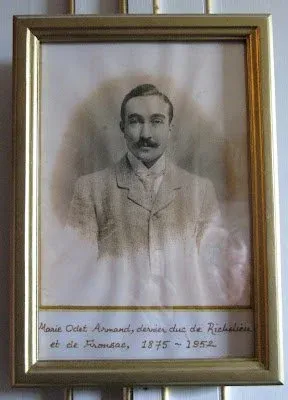
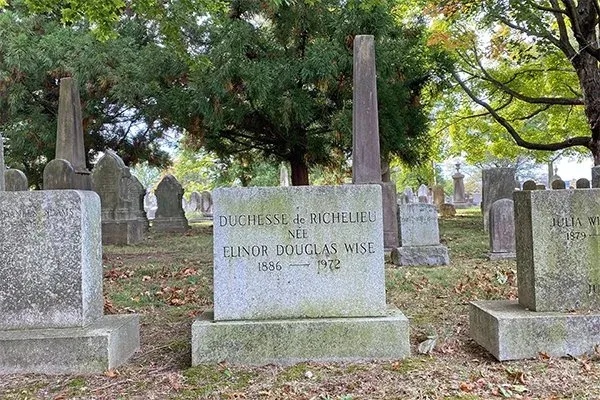
Duc de Richelieu, (Marie Odet Jean Armand Chapelle de Jumilhac), the last male in his family line, died in 1952 and is buried in Paris. Elinor died in Paris in 1972 and is buried in Baltimore’s Green Mount Cemetery. Her grave is only a few yards away from another famous Baltimore woman who married into European royalty, Elizabeth Patterson Bonaparte.
Sources and read more:
Image: Public Domain: By Agence Rol. Agence photographique (commanditaire) – Bibliothèque nationale de France, Public Domain, https://commons.wikimedia.org/w/index.php?curid=162153970
A memoire of the mystic last duke: The eighth and last Duke of Richelieu, by Swami Nikhilananda
A storybook saga behind a painting, by Helen Henry, Baltimore Sun, 3/2/1975
The RICH Duke to Marry the POOR Girl, San Francisco Call, June 22, 1913
Duchess of Richelieu, born in Baltimore, dies in Paris at 86, Baltimore Sun, April 29, 1972