(1851 – 1902)
By Kathi Santora
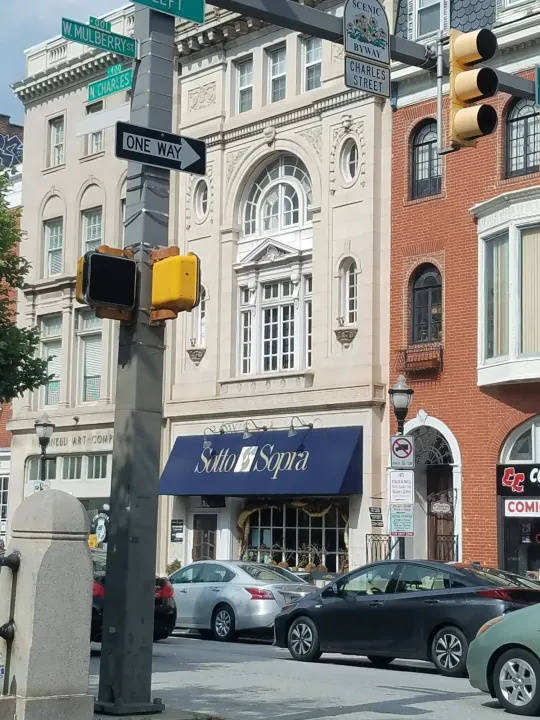
Customers at Sotto Sopra restaurant at 405 N. Charles Street dine in the same place where Charlotte (“Lottie”) Barton, a 19th century Baltimore fashion designer, catered to Baltimore and Washington DC socialites, including presidential wives Frances Cleveland and Caroline Harrison.
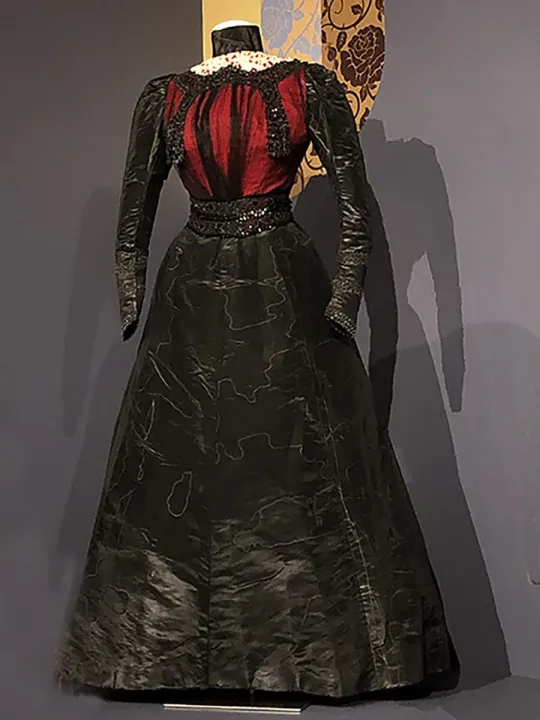
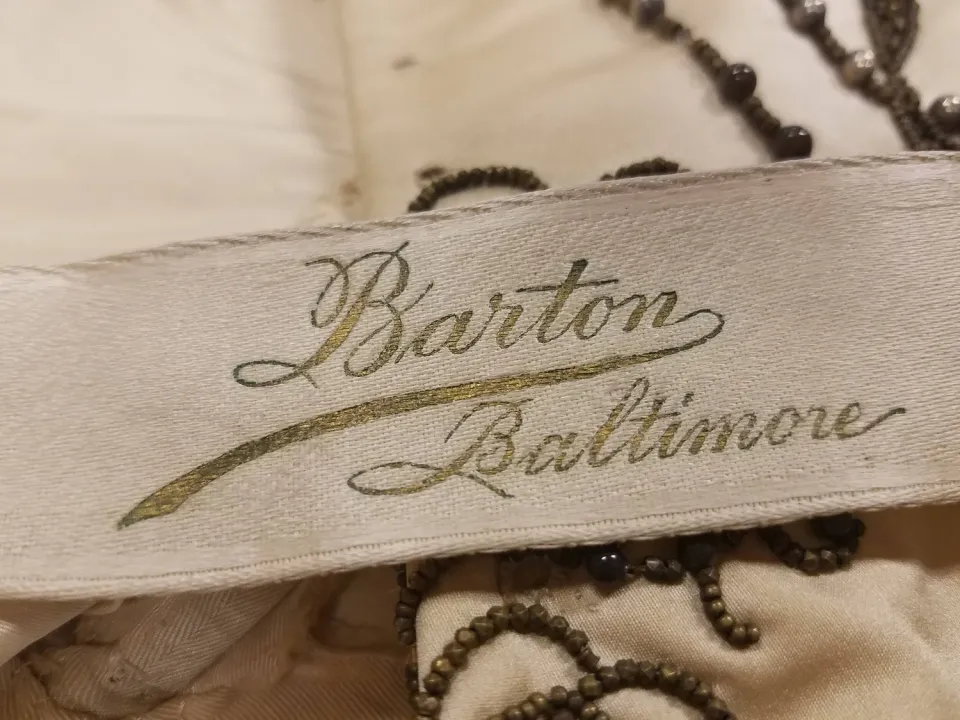
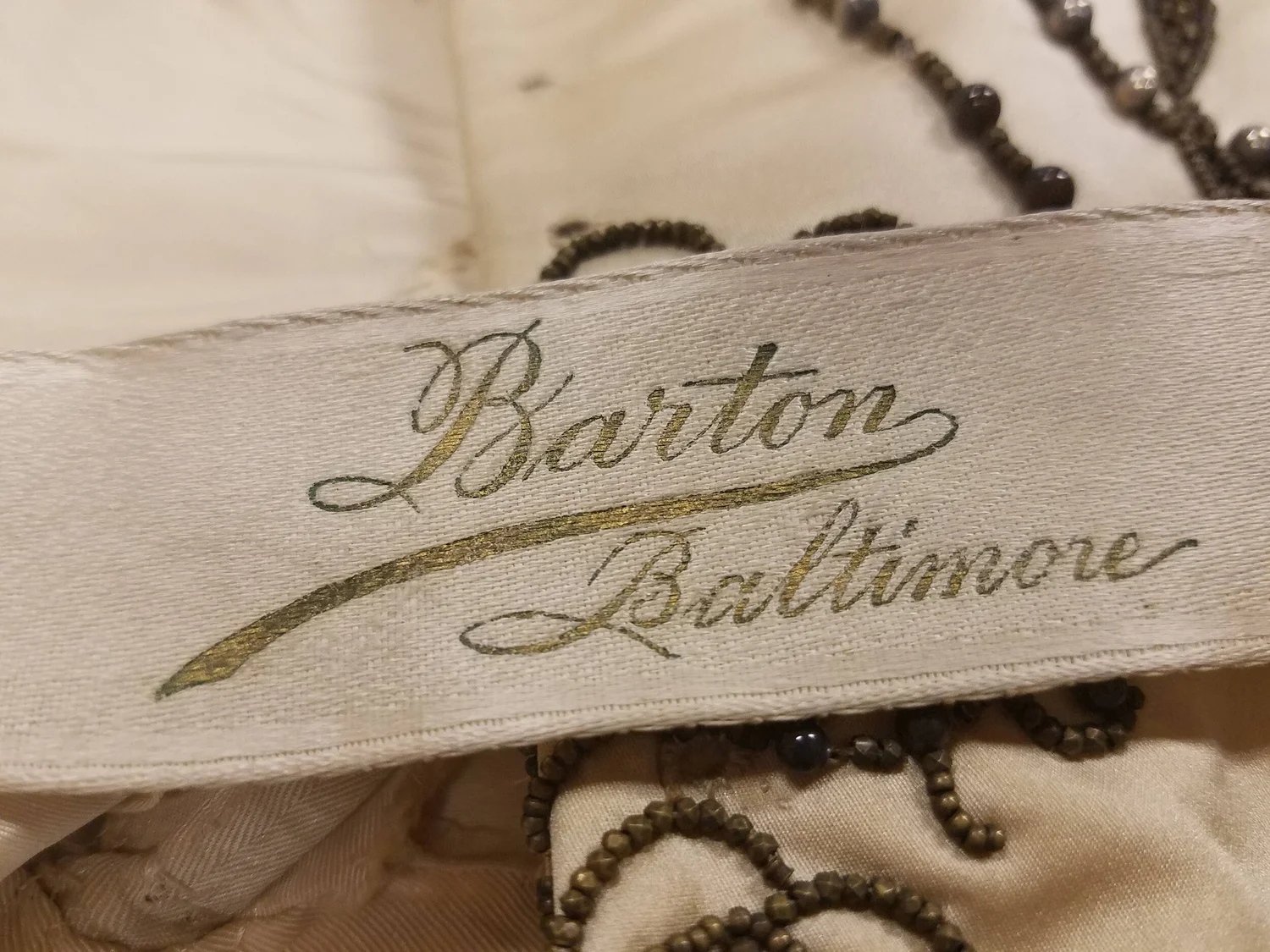
Despite these credentials and Barton’s live/work address in a stylish neighborhood, her place in Baltimore’s fashion history was mostly overlooked. That is, until interns and staff at the Maryland Historical Society unwrapped a dress bearing her label as they planned the year-long Spectrum of Fashion, which took place in 2019. The exhibit showcased nearly 100 examples of women’s and men’s clothing and accessories that span four centuries. Though fashion intern Nora Ellen Carleson was familiar with Ms. Barton’s work, it was not previously known that the MHS owned two examples of her work. Carleson set out to learn more about Lottie Barton.
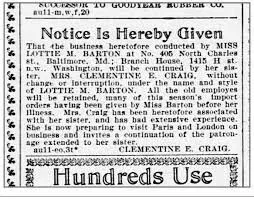
Records show that Barton was listed as a dressmaker as early at 1880. An early shop was located at 206 N. Howard Street, which would have made her a neighbor, and likely a clothing supplier, for Hutzler Brothers Company.
Barton was born into a middle-class family (her father was a newspaper editor and printer and her mother was a dressmaker). Her career, however, was as a go-to designer for Baltimore’s upper-class women. To do this, she traveled frequently to the world’s renowned fashion capitals such as London, Brussels and Paris. She advertised in Baltimore’s Blue Book, a printed directory of the city’s upper class. Barton also supported causes for the Archdiocese of Baltimore. Newspaper society pages covered her regular travels as well as her audience with the Pope on one trip.
Her worked appealed to a generation of Baltimore women who wanted to emulate the European fashions of the day. Examples of Barton’s work include dresses of flowing silks, intricate floral embroidery and rows of beads and pearls. Her reputation spread to Washington DC. She operated an additional shop on 1415 H St. NW just blocks from the White House and conveniently located for presidential wives Frances Cleveland and Caroline Harrison.
Though well-known in our region, Barton only gained national news attention when she was caught smuggling two trunks of dresses, fabrics and kid leather gloves, valued at about $5,000, while returning to New York from an 1893 business trip to France.
It was not unheard of for fashion designers to attempt to avoid hefty duties on their European purchases. The event was said to be particularly newsworthy due to the excessive amount of histrionics demonstrated by Barton’s colleagues. Reports noted, though, that Barton herself remained cool and collected.
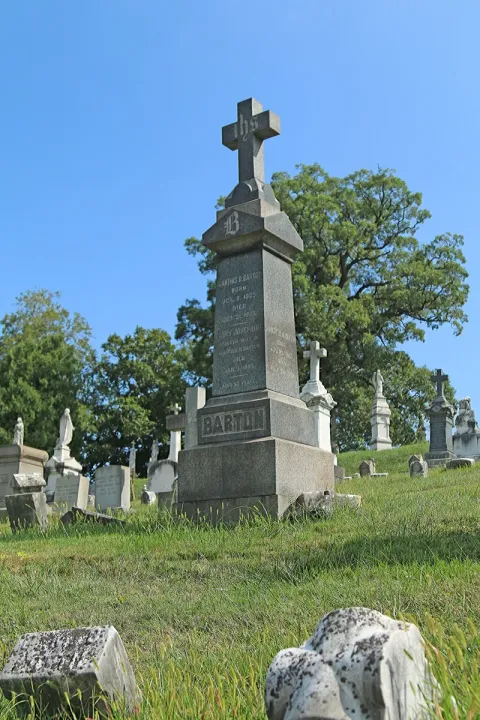
Lottie Barton died in 1902 after an unspecified illness. In an obituary, The Baltimore Sun lauded her successful business and her “amiable personal qualities as well, which endeared her to a very large constituency.” She is buried in New Cathedral Cemetery.
Though her family attempted to carry on the business, by 1907 local auctioneers Pattinson and Graham auctioned off the remaining fabrics, trims, machinery and dress forms.
Sources:
Finding First Lady Frances at the Maryland Historical Society Fashion Archives by Nora Ellen Carleson, 2018 Summer Maryland Historical Society Fashion Archives Intern
Lottie Barton: Dressmaker, Importer, Smuggler by Nora Ellen Carleson, Summer 2018 Fashion Archives Intern
Spectrum of Fashion catalogue, 2019, Maryland Historical Society
A leading force in shaping the sartorial identity of the city’: Unraveling the threads of Lottie Barton’s life by Jacques Kelly, The Baltimore Sun, June 22, 2019
Click on gallery to read captions