
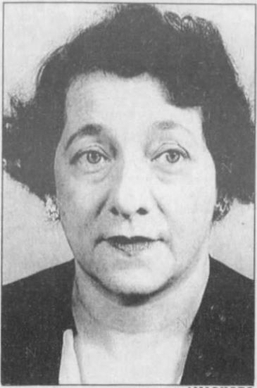
Rose S. Zetzer
(1904 – 1998)
By Kathi Santora
Though Rose S. Zetzer graduated from the University of Maryland Law School in 1925, she was not admitted to the Maryland State Bar Association (MSBA), a voluntary professional organization for attorneys, until 1946.
That delay was not for lack of trying: Zetzer submitted membership applications annually for 20 years. Finally, with Zetzer’s admission as their first woman member, MSBA became the last such state organization in the country to admit women.
The exclusion of professional women in the mainstream was typical in those days. After graduation, Zetzer was turned down repeatedly for positions in Baltimore law firms. (It is reported that many were willing to hire her as a stenographer, a position that she held to put herself through law school.)
Just leap the barriers
Instead, Zetzer forged her own path, beginning by establishing her own law practice in Baltimore’s Equitable Building at 10 N. Calvert Street. Even then, clients were sometimes reluctant to pay her in cash, offering candy and hosiery instead. In 1940, she formed Zetzer, Carton, Friedler, and Parke, Maryland’s first all-women law firm.
She recalled that at least two childhood experiences influenced her future focus on equality. She had early memories of marching in suffrage parades with her mother. Also, an eighth-grade school discussion about women’ s right to vote inspired her dream of a law career.
The times were changing and her leadership was a part of that
Zetzer built a memorable career, focusing on causes that were not always popular: domestic law, legal aid for those in need, women’s equality and the representation of several Jewish organizations. She lobbied for the ability of married women to work, as well as for the Equal Rights Amendment. Zetzer also was the first woman appointed to the Legal Aid Bureau of Baltimore’s board.
Perhaps most memorably, Zetzer advocated for women to be able to sit on juries, which was prohibited in Maryland. She and other advocates argued that shielding women from sensitive trial topics and the lack of women’s restrooms in Baltimore’s courthouse were no reasons to deny jury duty to women. This right was finally granted by legislation in 1947.
Rose Zetzer’s legacy lives today in the Rose Zetzer Fellowship Program for students who show leadership and commitment to women’s rights.
Zetzer retired in the 1990s and died in 1998. She is buried in Bnai Israel Congregation Cemetery, located in Baltimore City.
Resources and Read More
The Early Female Jewish Members of the Maryland Bar 1920-29, Maryland Law Review, Deborah Sweet, Eyler, Volume 74, Issue 3 (2015), accessed 3/2/26
Baltimore Jewish Hall of Fame, accessed 3/2/26
Rose Zetzer, Pioneer for Women’s Equality in Maryland, I95 Business, by Sarah Stephen, April 14, 2022
Practice-Based Learning: The Rose Zetzer Fellowship Program, Francis King Cary School of Law, accessed 3/2/26